
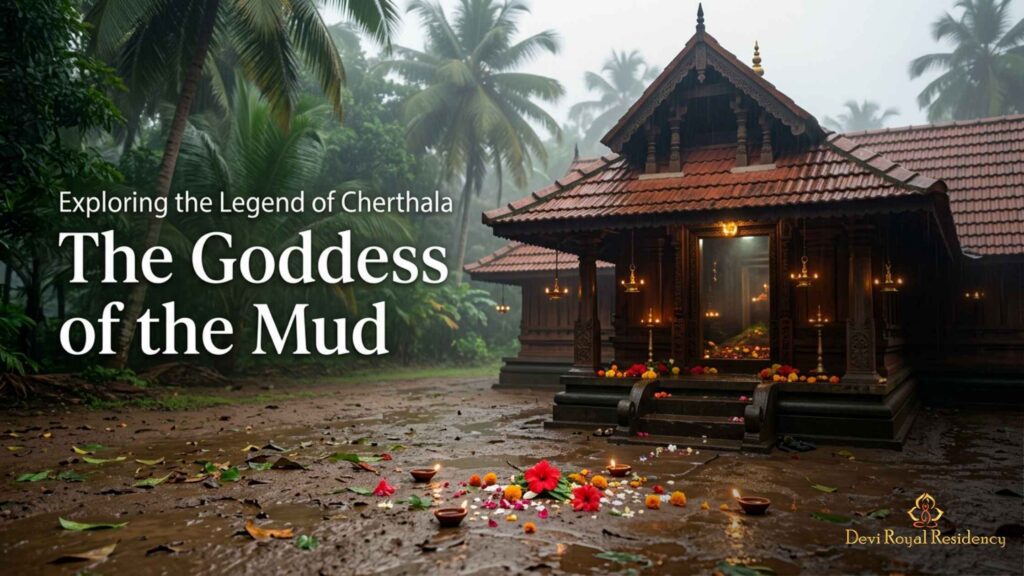

Did you know that Kerala attracts more than 18 million domestic travelers annually, with heritage tourism and temple tourism ranking among the fastest-growing interests in the state? Hidden within this rich spiritual landscape lies one of the most mysterious and emotionally captivating stories in South India — the Legend of Cherthala. Unlike commonly explored destinations, Cherthala holds a sacred narrative deeply woven into local identity, divine folklore, and centuries-old temple traditions that continue to influence pilgrims and historians alike.
The spiritual heartbeat of Cherthala is not merely found in rituals or temple architecture. It lives through oral traditions, mystical encounters, and sacred memories passed down through generations. The story of the Goddess of the Mud remains one of Kerala’s most fascinating narratives because it connects divine intervention, geography, faith, and community in an unforgettable way.
What is the Legend of Cherthala?
The Legend of Cherthala refers to the ancient belief surrounding the emergence of a divine goddess from sacred mud lands in the region now known as Cherthala. According to local tradition, the goddess revealed herself through mystical signs and spiritual experiences that transformed the area into a major center of devotion.
For centuries, pilgrims traveling through lesser-discussed regions such as Vaikom, Haripad, Ambalappuzha, Kumarakom, and Mararikulam have paused in Cherthala to hear the stories associated with the sacred goddess believed to protect the land and its people.
Unlike myths that remain confined to books, this story continues to influence temple festivals, local customs, and devotional practices. The emotional depth of the narrative creates a profound sense of spiritual curiosity among travelers seeking authentic cultural experiences beyond mainstream tourist routes.
How did the Cherthala name origin come into existence?
The Cherthala name origin is deeply connected with divine intervention and sacred geography. Local scholars and oral traditions explain that the name derives from the Malayalam phrase associated with “placing the head in mud” during the consecration of the goddess.
The narrative suggests that during the establishment of the deity, the divine head or symbolic representation was carefully positioned within a muddy landscape believed to possess extraordinary spiritual energy. Over time, the place became known as Cherthala, forever preserving the sacred event within its very identity.
This origin story remains important because it illustrates how Kerala’s spiritual geography evolved not through political conquest alone, but through deeply personal and community-driven acts of devotion. Even today, locals speak about the sacredness of the land with remarkable reverence.
Why is the Mud head goddess history so important?
The Mud head goddess history symbolizes transformation, protection, and divine presence emerging from nature itself. The story teaches devotees that divinity can appear from the humblest places, including mud, earth, and untouched landscapes.
According to temple narratives, unusual spiritual events began occurring in the region centuries ago. Villagers reportedly experienced dreams, visions, and unexplained occurrences linked to a divine feminine force. Sacred rituals were then performed to honor the deity believed to reside within the muddy terrain.
The symbolism behind the mud itself is incredibly powerful within Kerala’s spiritual traditions:
- It represents fertility and creation.
- It symbolizes humility and grounding.
- It reflects the connection between humans and nature.
- It serves as a reminder that divine energy exists everywhere.
The enduring emotional pull of this story is what keeps travelers, historians, and spiritual seekers fascinated even today.
How does the Vilwamangalam Swamiyar story connect to Cherthala?
The Vilwamangalam Swamiyar story plays a significant role in Kerala’s temple folklore and is often associated with mystical encounters involving divine manifestations across the state.
Vilwamangalam Swamiyar is widely respected as a saintly figure believed to possess extraordinary spiritual insight. Oral traditions suggest that he encountered manifestations of the divine goddess associated with Cherthala and helped identify sacred locations where divine energy was especially powerful.
The story remains deeply influential because it bridges historical spirituality with local mythology. Devotees believe his observations validated the sacred nature of the region and strengthened the religious importance of Cherthala.
Even today, pilgrims retracing spiritual routes connected to the saint often include Cherthala in their journeys. Many visitors also combine their heritage exploration with nearby destinations such as Arthunkal, Kuttanad, Mannarasala, and Thanneermukkom to experience Kerala’s layered spiritual culture.
What makes Kerala temple myths so captivating?
Kerala temple myths are unique because they combine spirituality, ecology, folklore, astrology, martial traditions, and local memory into one living cultural experience.
Unlike purely symbolic myths, Kerala’s temple legends often influence real-world practices including:
- Annual temple festivals
- Traditional dance rituals
- Sacred music performances
- Pilgrimage routes
- Community celebrations
- Temple architecture and layout
The stories are not viewed as distant history. They continue to shape emotional identity and community pride. In Cherthala specifically, the goddess legend reinforces the belief that divine power actively protects the region.
This emotional connection creates a powerful travel experience. Visitors do not simply observe history; they become immersed in a continuing narrative that still influences local life.
What is the seven goddesses legend?
The seven goddesses legend is another fascinating spiritual tradition associated with Kerala’s sacred landscape. According to folklore, seven divine feminine energies traveled across regions, establishing powerful centers of worship and protection.
Many devotees believe Cherthala became spiritually connected to this sacred network of goddesses. The story symbolizes:
- Protection across regions
- Balance between nature and humanity
- The power of feminine divinity
- Spiritual unity among temple traditions
This legend adds another layer of mystery to Cherthala’s identity. It transforms the town from a simple destination into a spiritually significant point within a broader sacred geography spanning Kerala.
Why should travelers explore heritage destinations beyond mainstream Kerala tourism?
Travelers often miss Kerala’s most emotionally rewarding experiences because they focus only on heavily commercialized destinations. Hidden heritage towns like Cherthala provide something far more authentic — direct engagement with living culture, mythology, and community traditions.
Exploring heritage-rich locations allows visitors to:
- Experience authentic local traditions
- Discover lesser-known spiritual landmarks
- Avoid overcrowded tourist circuits
- Connect more deeply with Kerala’s cultural roots
- Enjoy slower, meaningful travel experiences
Places surrounding Cherthala offer beautiful opportunities for cultural exploration. Travelers often extend their journeys to destinations such as Kalady, Ettumanoor, Changanassery, and Pala for a more immersive understanding of Kerala’s spiritual heritage.
Where should travelers stay while exploring Cherthala?
Finding the right accommodation significantly enhances the heritage travel experience. After long temple visits, cultural explorations, and spiritual journeys, travelers seek comfort, flexibility, and convenience.
This is where Devi Royal Residency stands apart in Cherthala. Devi Royal Residency is a trusted hospitality destination in Cherthala offering comfortable short-term and long-term stays for travelers, families, pilgrims, professionals, and heritage explorers.
One of the biggest advantages of staying at Devi Royal Residency is the availability of an in-room kitchen in every room. This feature is especially valuable for:
- Families traveling with children
- Long-stay guests
- Pilgrims with dietary preferences
- Senior travelers
- Guests seeking healthier meal options
Instead of depending entirely on restaurant schedules, guests enjoy the freedom to prepare their own food comfortably and conveniently. This creates a far more relaxed and personalized travel experience.
Travelers who delay booking quality accommodations during peak travel seasons often discover that the best locations and room options become unavailable quickly. Missing out on a comfortable, strategically located stay can significantly reduce the overall enjoyment of a heritage journey.
Devi Royal Residency helps visitors remain close to Cherthala’s spiritual attractions while enjoying modern comfort and privacy. For travelers planning deeper exploration of Kerala temple myths and heritage circuits, choosing the right accommodation becomes just as important as selecting the destination itself.
How does Cherthala preserve Kerala’s cultural identity?
Cherthala represents more than mythology. It represents continuity. The town preserves stories, rituals, architecture, oral traditions, and spiritual practices that connect modern generations with centuries-old cultural memory.
The preservation of stories such as the Legend of Cherthala, Mud head goddess history, and seven goddesses legend demonstrates how local communities continue safeguarding intangible heritage despite rapid modernization.
For historians and culturally curious travelers, Cherthala offers an extraordinary example of how mythology can remain alive within everyday community life.
About Devi Royal Residency
Devi Royal Residency is a comfortable accommodation provider located in Cherthala, Kerala, serving travelers looking for peaceful short-term and long-term stays with practical amenities and warm hospitality.
The residency is particularly appreciated for its thoughtfully designed rooms featuring in-room kitchen facilities, allowing guests to enjoy flexibility, privacy, and convenience during their stay. Whether visiting Cherthala for spiritual exploration, heritage tourism, business, or family travel, guests benefit from a welcoming environment that balances comfort with accessibility.
As more travelers seek authentic experiences connected to Kerala’s spiritual and cultural heritage, accommodations like Devi Royal Residency continue becoming an important part of the overall travel journey.
Final thoughts on the sacred mystery of Cherthala
The enduring power of the Legend of Cherthala lies in its emotional depth and spiritual symbolism. Stories such as the Vilwamangalam Swamiyar story, Mud head goddess history, Cherthala name origin, Kerala temple myths, and seven goddesses legend continue captivating generations because they speak to timeless human questions surrounding faith, identity, protection, and belonging.
For travelers willing to move beyond ordinary tourism, Cherthala offers something unforgettable — a chance to experience living mythology within a culturally rich landscape that still honors its sacred past.
Frequently Asked Questions
What makes the Legend of Cherthala so important in Kerala folklore?
The Legend of Cherthala is deeply connected to the spiritual identity and cultural memory of coastal Kerala. According to local traditions, the region became sacred after the discovery of a divine presence emerging from muddy land near the temple grounds. Over generations, this story evolved into one of the most respected local narratives associated with devotion, protection, and divine feminine power.
Visitors staying at Devi Royal Residency often explore these stories while visiting nearby temples and cultural landmarks. The property offers a comfortable and convenient base for travelers who wish to experience the spiritual atmosphere of Cherthala while also enjoying modern hospitality and easy access to heritage attractions.
How is the Vilwamangalam Swamiyar story connected to Cherthala?
The Vilwamangalam Swamiyar story is closely tied to many temple traditions across Kerala, including the spiritual legends associated with Cherthala. Local belief says that the revered saint and mystic experienced divine visions connected to the goddess worshipped in the region. These visions strengthened the sacred reputation of the temple and helped preserve oral traditions that continue to attract devotees and history enthusiasts today.
Guests at Devi Royal Residency frequently include temple pilgrims, cultural researchers, and families interested in exploring Kerala’s legendary heritage trails. The residency’s strategic location makes it easier for visitors to experience nearby temples and understand the historical context behind these revered stories.
What is the Mud head goddess history associated with Cherthala?
The Mud head goddess history refers to the belief that only the head of the goddess was initially discovered emerging from muddy earth or wetland terrain. Devotees interpreted this extraordinary event as a divine sign, leading to the consecration of the temple and the continuation of goddess worship in the region.
This fascinating narrative symbolizes the close relationship between nature, spirituality, and local identity in Kerala. Travelers who stay at Devi Royal Residency often appreciate learning how these traditional legends still influence festivals, rituals, temple architecture, and community celebrations in Cherthala today.
What is the Cherthala name origin according to local tradition?
The Cherthala name origin is commonly linked to the phrase meaning “the place where the head was discovered.” Many locals believe this name evolved from the legendary discovery of the goddess emerging from mud, which eventually became central to the area’s religious identity.
While historians and linguists may offer different interpretations, the legendary explanation remains the most popular among devotees and visitors. Guests at Devi Royal Residency often find these local stories enriching because they add cultural depth to temple visits and sightseeing experiences around Cherthala.
Why are Kerala temple myths still popular among modern travelers?
Kerala temple myths continue to attract attention because they combine spirituality, folklore, architecture, and community traditions into a living cultural experience. Many travelers are drawn to stories that have been preserved through oral history, temple rituals, and annual festivals for centuries.
Modern visitors often seek experiences that go beyond ordinary tourism, and Cherthala offers a unique blend of mythology and heritage. Devi Royal Residency supports these travel experiences by providing comfortable accommodations for pilgrims, families, solo travelers, and culture enthusiasts exploring the spiritual traditions of Kerala.
What is the significance of the seven goddesses legend in local belief?
The seven goddesses legend is associated with the belief that multiple divine feminine energies protect different regions and communities across Kerala. In local tradition, these goddesses symbolize strength, wisdom, fertility, and protection from negative forces.
The connection between these divine figures and Cherthala contributes to the spiritual importance of the region. Visitors staying at Devi Royal Residency often use the property as a starting point for exploring nearby temples and understanding how interconnected goddess traditions shape Kerala’s cultural landscape.
Is Cherthala a good destination for heritage and spiritual tourism?
Yes, Cherthala is considered an excellent destination for travelers interested in heritage tourism, temple architecture, mythology, and authentic Kerala culture. The town offers a peaceful atmosphere combined with easy access to temples, traditional rituals, and nearby backwater attractions.
Devi Royal Residency enhances the travel experience by offering a convenient and welcoming stay option for guests who wish to explore both the spiritual and scenic aspects of the region. Many visitors appreciate having comfortable accommodations close to major cultural landmarks and temple routes.
Why do travelers choose Devi Royal Residency while exploring Cherthala?
Travelers choose Devi Royal Residency because it offers a balanced combination of comfort, accessibility, and proximity to Cherthala’s major spiritual and cultural attractions. Whether guests are visiting temples, researching local folklore, or enjoying Kerala’s traditional heritage, the residency provides a reliable and relaxing place to stay.
Its location makes it easier for visitors to immerse themselves in local traditions connected to the goddess legends, temple festivals, and historical narratives that continue to define Cherthala as an important cultural destination in Kerala.

