
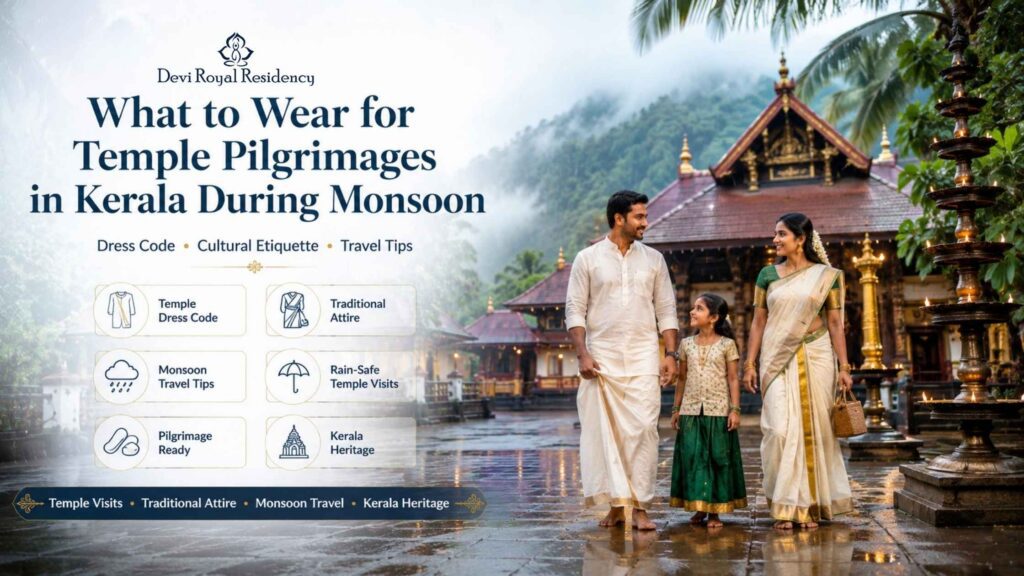
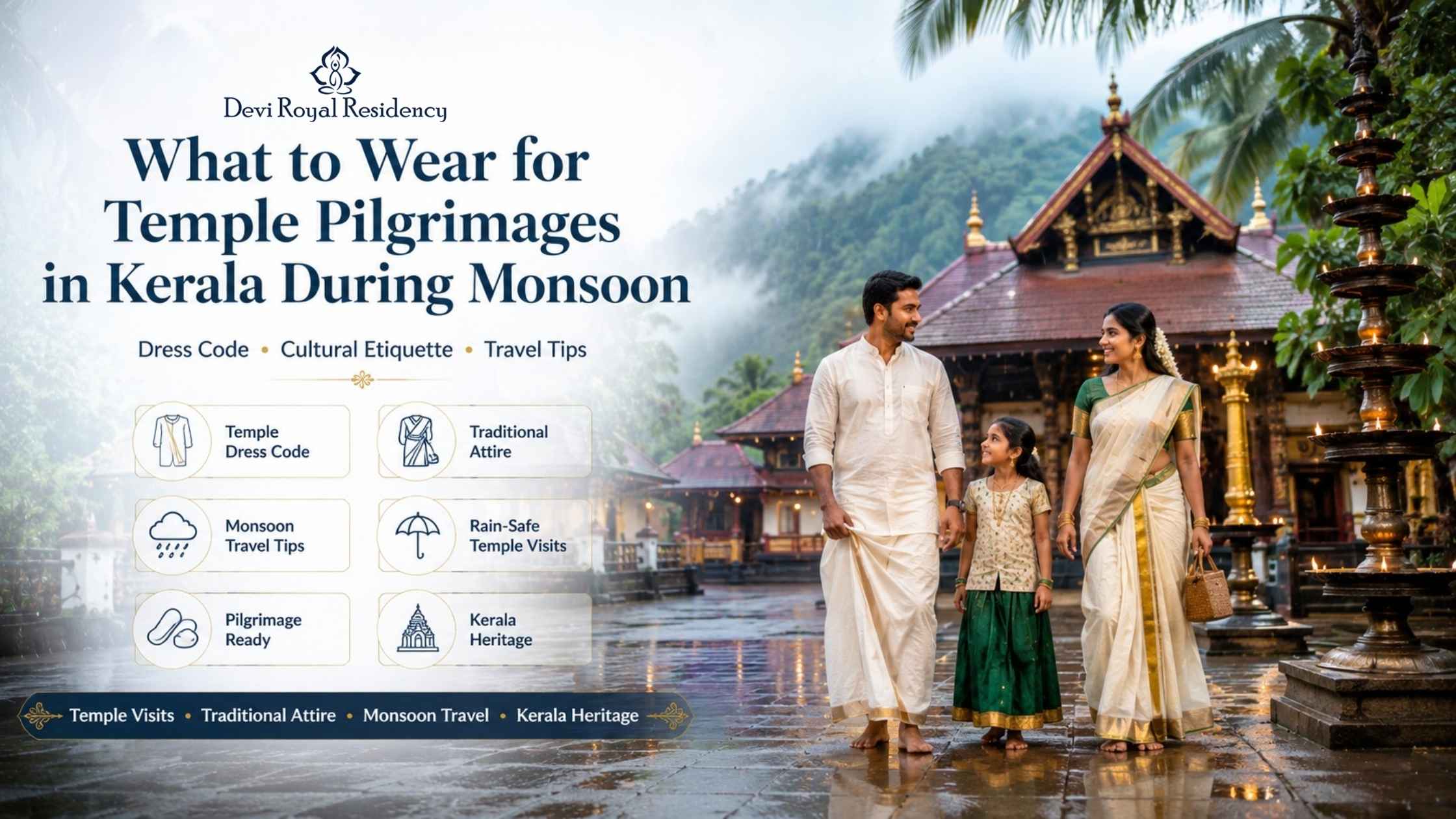
Planning temple pilgrimages in Kerala during the rainy season? The most suitable clothing includes modest, breathable, quick-drying traditional wear that complies with temple customs while keeping you comfortable in humid and wet conditions. Pilgrims should prioritize lightweight fabrics, conservative dressing, waterproof accessories, and footwear that can withstand slippery surfaces.
Kerala attracts millions of domestic and international visitors every year, and temple tourism continues to be one of the state’s most significant cultural attractions. During the monsoon months, the spiritual atmosphere becomes even more captivating as temple ponds fill up, greenery flourishes, and ancient shrines take on a mystical charm. However, many pilgrims underestimate how important proper clothing and preparation are for a successful journey. Understanding the Kerala temple dress code before arrival can help avoid inconvenience, denied entry, or discomfort caused by heavy rains.
Whether you are visiting renowned shrines in Vaikom, Ettumanoor, Haripad, Thiruvalla, Chengannur, Ambalapuzha, or the sacred temples of North Kerala, knowing what to wear can significantly enhance your spiritual experience.
Why does clothing matter during temple visits in Kerala?
Temple attire in Kerala is deeply connected to tradition, respect, and cultural heritage. Appropriate clothing demonstrates reverence toward the deity and fellow devotees while helping maintain the sanctity of the temple environment.
Many visitors assume that rain jackets and modern travel wear are acceptable everywhere. While such clothing may be practical outside temple premises, many temples have specific requirements regarding dress, especially for entry into sanctum areas.
The combination of monsoon weather and religious customs creates unique challenges. Visitors must balance comfort, modesty, tradition, and weather protection throughout their pilgrimage.
What is the Kerala temple dress code during monsoon?
The Kerala temple dress code generally emphasizes modest and traditional clothing. While exact rules vary by temple, the following guidelines are widely accepted:
- Clothing should cover shoulders and knees.
- Avoid revealing, tight-fitting, or transparent garments.
- Traditional attire is preferred whenever possible.
- Clean and respectful clothing is expected.
- Footwear must usually be removed before entering temple premises.
Men may be required in some temples to wear a mundu or dhoti instead of trousers when entering certain sacred sections. Women are often encouraged to wear sarees, salwar kameez, set mundu, or other modest traditional garments.
Before visiting any temple, verify specific requirements, especially at older and highly revered shrines.
What are the best clothing choices for a monsoon pilgrimage Kerala journey?
A successful monsoon pilgrimage Kerala experience depends greatly on selecting practical yet culturally appropriate clothing.
For men
- Lightweight cotton mundu
- Quick-drying dhoti
- Cotton shirts with short drying times
- Traditional angavastram
- Extra set of dry clothes
For women
- Cotton sarees
- Salwar kameez made from breathable fabrics
- Set mundu for traditional visits
- Light shawls or dupattas
- Quick-dry inner garments
Choosing moisture-wicking fabrics helps maintain comfort during long temple queues and extended walking periods between shrines.
What traditional attire Kerala temples prefer?
Many pilgrims ask whether modern clothing is acceptable. While some temples permit contemporary attire that remains modest, traditional attire Kerala temples encourage often aligns more closely with local customs.
| Category | Recommended Attire | Benefits During Monsoon |
|---|---|---|
| Men | Mundu, Dhoti | Comfortable and culturally appropriate |
| Women | Saree, Set Mundu | Traditional acceptance and elegance |
| Young Adults | Modest Ethnic Wear | Easy movement and compliance |
| Children | Simple Traditional Clothing | Comfort and convenience |
Choosing traditional attire Kerala temples appreciate can simplify entry procedures while allowing visitors to participate more authentically in rituals and cultural practices.
How can pilgrims stay comfortable during heavy rains?
The key is preparation. Kerala’s monsoon can bring sudden downpours, making roads slippery and clothing damp within minutes.
Follow these practical rain travel tips Kerala pilgrims frequently rely upon:
- Carry a compact umbrella.
- Pack waterproof pouches for electronics.
- Bring multiple pairs of socks.
- Use lightweight raincoats outside temple premises.
- Keep a dry set of clothing in your bag.
- Store important documents in waterproof folders.
- Choose footwear with excellent grip.
- Carry a small microfiber towel.
These rain travel tips Kerala visitors follow can significantly improve comfort throughout a multi-day pilgrimage.
Which temples are especially beautiful during monsoon?
Several temple destinations become exceptionally scenic during the rainy season.
- Vaikom Mahadeva Temple
- Ettumanoor Mahadeva Temple
- Chengannur Mahadeva Temple
- Thiruvalla Sree Vallabha Temple
- Haripad Sree Subrahmanya Swamy Temple
- Parassinikadavu Muthappan Temple
- Kottiyoor Temple region
- Thirunelli Temple
The surrounding landscapes become lush and vibrant, creating an unforgettable spiritual atmosphere.
What should pilgrims pack besides clothing?
Many travelers focus solely on garments and overlook other essentials. A comprehensive pilgrimage packing list should include:
- Waterproof backpack cover
- Prescription medications
- Mosquito repellent
- Power bank
- Travel-size toiletries
- Waterproof footwear
- Traditional clothing for temple entry
- Extra towels
- Reusable water bottle
- Emergency contact information
Being prepared reduces stress and allows greater focus on the spiritual aspects of the journey.
Why do many pilgrims struggle with accommodation during temple tours?
One common challenge involves finding accommodation that supports both comfort and flexibility. During extended pilgrimage circuits, travelers often need facilities that allow them to rest properly, dry wet clothing, and prepare meals according to dietary preferences.
This is especially important for elderly devotees, families with children, and travelers observing religious food restrictions.
Many accommodations offer only basic facilities, forcing guests to depend entirely on outside food. During monsoon weather, this can become inconvenient, particularly after long temple visits.
Where should pilgrims stay for comfort and convenience?
For travelers exploring temple destinations across central Kerala, Devi Royal Residency provides a practical accommodation option in Cherthala Allepey. The property offers comfortable rooms suitable for both short-term and long-term stays.
One of the most valuable advantages for pilgrims is the availability of an in-room kitchen in every room. This unique feature allows guests to prepare their own meals according to personal dietary preferences, religious requirements, or health considerations.
For families, senior citizens, and devotees undertaking extended temple pilgrimages in Kerala, having access to a private cooking space can make a significant difference in comfort and convenience.
After spending hours traveling through rain-soaked roads and temple corridors, returning to a room where you can prepare warm food and enjoy a comfortable stay creates a level of flexibility many accommodations simply cannot provide.
How does proper preparation improve the pilgrimage experience?
The difference between a stressful pilgrimage and a memorable spiritual journey often comes down to preparation. Travelers who understand the Kerala temple dress code, carry weather-appropriate essentials, and choose suitable accommodation are better positioned to focus on worship rather than logistics.
The monsoon season offers a unique opportunity to witness Kerala’s sacred spaces at their most beautiful. The sound of rainfall, lush temple surroundings, and vibrant cultural traditions create an atmosphere that many devotees consider deeply transformative.
Those who arrive unprepared may find themselves dealing with wet clothing, footwear issues, travel delays, and limited dining options. Conversely, pilgrims who plan carefully can fully embrace the serenity and spiritual richness that monsoon temple journeys offer.
About Devi Royal Residency
Devi Royal Residency is an accommodation provider located in Cherthala Allepey, Kerala, serving travelers, families, professionals, and pilgrims seeking comfortable short-term and long-term stays. The property is distinguished by its thoughtfully designed rooms that include an in-room kitchen, allowing guests to prepare meals conveniently during their stay.
For pilgrims exploring Kerala’s temple circuit, the combination of comfortable lodging, extended-stay convenience, and self-cooking facilities provides practical benefits that enhance the overall travel experience. Whether your journey spans a few days or several weeks, choosing accommodation that supports your lifestyle can make your pilgrimage significantly more comfortable and rewarding.
Final thoughts
When planning temple pilgrimages in Kerala during the rainy season, dressing appropriately is not merely a matter of comfort—it is a sign of respect for local traditions and sacred customs. By following the Kerala temple dress code, choosing traditional attire Kerala temples welcome, preparing thoroughly for a monsoon pilgrimage Kerala experience, and implementing proven rain travel tips Kerala experts recommend, visitors can enjoy a meaningful and memorable spiritual journey.
The beauty of Kerala’s temples during monsoon is something every devotee should experience at least once. With proper preparation, suitable clothing, and a comfortable place to stay, your pilgrimage can become one of the most enriching journeys of your life.
Frequently Asked Questions
What clothing is considered appropriate for temple visits in Kerala during the monsoon?
When planning temple pilgrimages in Kerala during the rainy season, modest and comfortable clothing is recommended. Men are generally advised to wear traditional garments such as a mundu or dhoti, while women may choose sarees, salwar suits, or other conservative outfits that cover the shoulders and knees. Lightweight fabrics that dry quickly are especially useful during frequent monsoon showers.
Since temple customs can vary from one shrine to another, visitors should always verify specific requirements before arriving. Carrying an extra set of dry clothes can also help ensure a more comfortable pilgrimage experience.
Is there a standard Kerala temple dress code that pilgrims should follow?
The Kerala temple dress code generally emphasizes modesty, cleanliness, and respect for religious traditions. Many temples require men to wear a dhoti or mundu and may restrict entry while wearing shorts or certain western garments. Women are often encouraged to wear sarees, salwar kameez, set mundu, or other traditional attire.
Because regulations differ among temples, checking local guidelines in advance is always recommended. Being prepared helps avoid inconvenience and ensures a smooth spiritual visit.
What are the best clothing materials to wear during a monsoon pilgrimage?
For a comfortable monsoon pilgrimage Kerala experience, breathable and quick-drying fabrics are often the best choice. Cotton blends, lightweight traditional wear, and moisture-friendly materials can help pilgrims stay comfortable despite high humidity and sudden rainfall.
Avoid heavy fabrics that absorb large amounts of water, as they can become uncomfortable during long temple visits and travel between pilgrimage destinations.
Why is traditional clothing preferred at many Kerala temples?
Many temples encourage traditional attire Kerala temples customs because it reflects cultural heritage, religious respect, and long-standing devotional practices. Wearing traditional garments can help visitors align with the spiritual atmosphere and local expectations of the temple environment.
Even when not mandatory, dressing conservatively demonstrates consideration for the sacred nature of the site and for fellow devotees.
What rain-related essentials should pilgrims carry while visiting temples?
Some practical rain travel tips Kerala visitors should follow include carrying a compact umbrella, waterproof bag covers, a lightweight raincoat, spare clothing, and footwear with good grip. These essentials help protect belongings and make travel safer during wet weather conditions.
Keeping electronics and important documents in waterproof pouches is also advisable, especially when moving between multiple pilgrimage destinations.
What type of footwear is suitable for temple pilgrimages during the monsoon?
Since footwear must usually be removed before entering temple premises, pilgrims often prefer comfortable sandals or slip-on footwear that can be easily taken off and worn again. Non-slip soles are particularly useful during the rainy season when pathways may become wet and slippery.
Choosing footwear that dries quickly can also improve comfort throughout the journey.
How can Devi Royal Residency help pilgrims visiting Kerala temples during the monsoon?
Devi Royal Residency offers comfortable accommodation for travelers seeking a convenient and relaxing base during their pilgrimage journey. Guests can enjoy well-maintained rooms, easy access to important temple destinations, and a welcoming environment that supports both short and extended stays.
For pilgrims traveling during the monsoon season, staying at Devi Royal Residency can provide a comfortable place to rest, dry clothing and belongings, plan temple visits, and receive local guidance that helps make the overall travel experience smoother and more enjoyable.
How can pilgrims prepare for a smooth and respectful temple visit during the rainy season?
Preparation begins with researching temple-specific dress requirements, checking weather forecasts, carrying weather-appropriate clothing, and allowing extra travel time due to rain-related delays. Respecting local customs and maintaining modest attire throughout the visit are equally important.
Combining thoughtful planning with reliable accommodation such as Devi Royal Residency can help pilgrims focus more on the spiritual aspects of their journey and less on logistical concerns.