
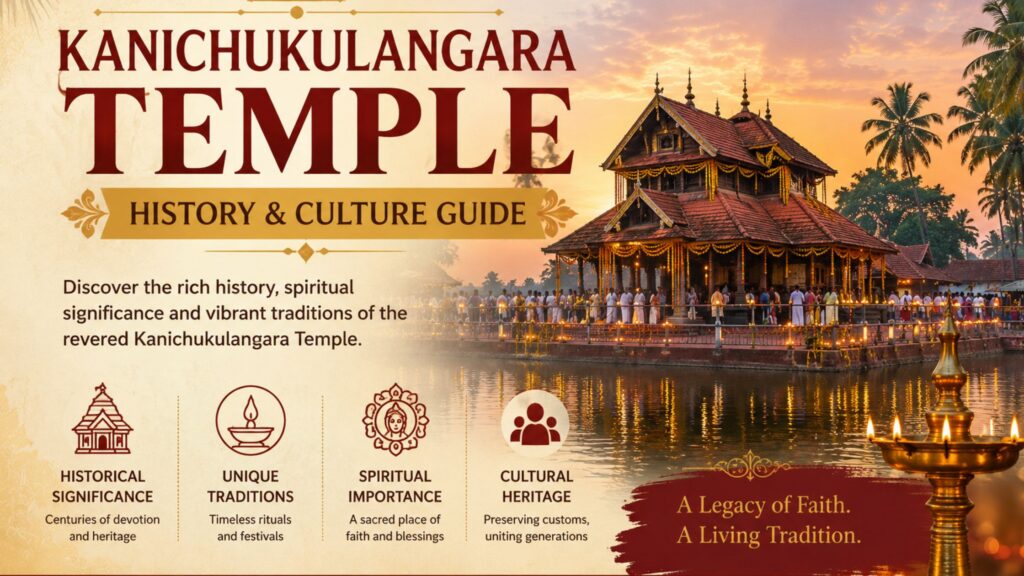
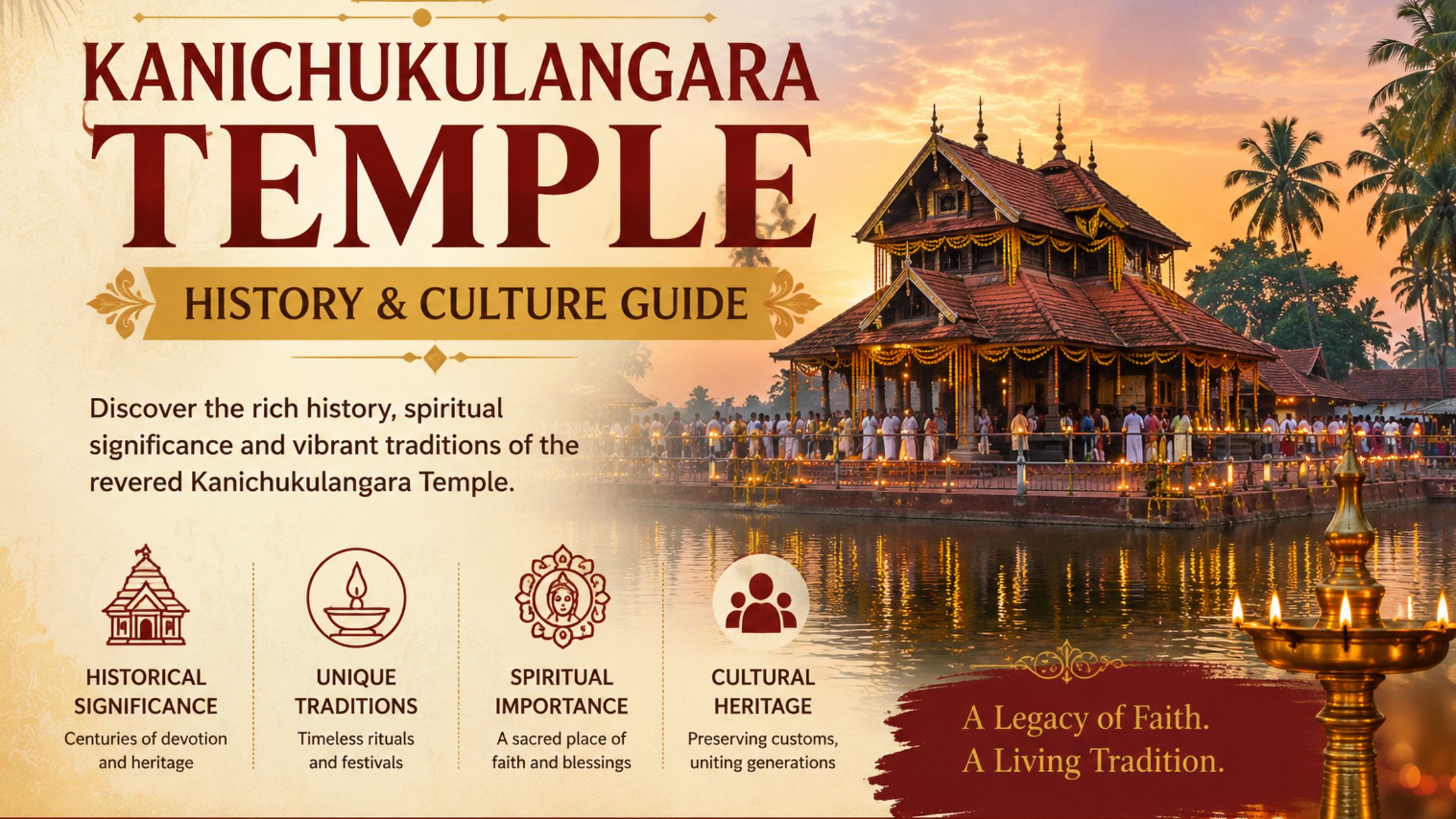
Kanichukulangara temple history is one of Kerala’s most fascinating cultural narratives, with the temple attracting thousands of devotees every year during its famous annual festival. According to publicly available tourism insights, Kerala’s temple festivals contribute significantly to cultural tourism, drawing millions of visitors annually. This makes understanding this temple not just spiritually enriching, but culturally essential.
What is Kanichukulangara temple history?
Kanichukulangara temple history refers to the origin, legends, rituals, and cultural evolution of the Bhagavathy temple located near Cherthala in Kerala. It reflects centuries-old traditions rooted in devotion, community practices, and regional identity.
The temple is dedicated to Goddess Bhagavathy, revered as a powerful protector and granter of wishes. The origins of the temple are deeply tied to folklore, where it is believed that divine energy manifested in this region, leading to the establishment of the shrine. Over time, the temple evolved into a spiritual nucleus for the surrounding communities.
Unlike many mainstream temples, the uniqueness of this temple lies in its inclusive traditions and rituals that have been preserved across generations. The Kanichukulangara temple history also highlights how local beliefs seamlessly blend with broader Kerala temple traditions, creating a distinct cultural identity.
Why is the temple culture Alleppey significant?
The temple culture Alleppey is significant because it represents a living tradition where rituals, festivals, and community participation intersect to create a vibrant cultural ecosystem.
While Alleppey is globally known for its backwaters, its temple culture offers a deeper, more immersive experience. At Kanichukulangara, cultural expressions go beyond worship—they include:
- Traditional art forms performed during festivals
- Community-led rituals passed down generations
- Symbolic ceremonies reflecting local beliefs
- Integration of spirituality with daily life
The temple culture Alleppey thrives on participation. Every ritual becomes a shared experience, making visitors feel like part of something larger than themselves.
What are the unique temple rituals Kerala followed here?
Temple rituals Kerala at Kanichukulangara are known for their authenticity, precision, and deep symbolic meaning, reflecting centuries-old practices.
These rituals include:
- Daily poojas conducted with strict adherence to tradition
- Festival rituals involving elaborate decorations and ceremonies
- Offerings to the deity symbolizing gratitude and devotion
- Community rituals where devotees actively participate
What sets these temple rituals Kerala apart is their continuity. Despite modernization, the rituals remain largely unchanged, preserving their original essence.
What is the Chikkara ritual and why is it important?
The Chikkara ritual is one of the most distinctive ceremonies associated with the temple, symbolizing devotion, discipline, and spiritual fulfillment.
The Chikkara ritual involves:
- Devotees offering a ceremonial item known as “Chikkara”
- Participation during specific festival periods
- A symbolic act of surrender to the deity
This ritual stands out because it is deeply personal yet collectively celebrated. The Chikkara ritual represents the emotional connection devotees share with the Goddess, making it a central highlight of the temple’s cultural identity.
How does the spiritual history Cherthala connect to the temple?
The spiritual history Cherthala is closely intertwined with the temple, as the region has long been a hub of religious and cultural activity in Kerala.
Cherthala has historically been known for:
- Ancient temples and sacred sites
- Strong community-based spiritual practices
- Integration of folklore with religious beliefs
The Kanichukulangara temple plays a crucial role in shaping the spiritual history Cherthala by acting as a focal point for devotion and cultural gatherings. It is not just a temple—it is a symbol of the region’s spiritual continuity.
What makes Kerala temple traditions unique here?
Kerala temple traditions at Kanichukulangara stand out for their authenticity, inclusiveness, and deep-rooted symbolism.
These traditions include:
| Aspect | Description |
|---|---|
| Architecture | Traditional Kerala-style temple structure |
| Ritual purity | Strict adherence to ritual guidelines |
| Festivals | Vibrant celebrations with community participation |
| Offerings | Symbolic items representing devotion |
Kerala temple traditions here emphasize harmony between nature, spirituality, and community life, making every visit deeply meaningful.
How to experience the temple fully?
To truly experience Kanichukulangara temple history and culture, visitors should go beyond a simple visit and immerse themselves in the rituals and surroundings.
Here’s how:
- Visit during festival season to witness the Chikkara ritual
- Observe temple rituals Kerala closely to understand their significance
- Engage with locals to learn about spiritual history Cherthala
- Spend time absorbing the peaceful environment
This approach transforms a visit into a memorable cultural and spiritual journey.
Where to stay for a comfortable and authentic experience?
After exploring the temple and its cultural richness, choosing the right place to stay becomes crucial. This is where Devi Royal Residency in Cherthala Alleppey stands out.
Devi Royal Residency is a premium accommodation option offering comfortable rooms for both short-term and long-term stays. What truly sets it apart is its unique feature—every room comes with an in-room kitchen. This allows guests to prepare their own food, offering unmatched convenience and flexibility, especially for families and long-stay travelers.
Many visitors unknowingly compromise their travel experience by choosing generic accommodations. But when you stay at Devi Royal Residency, you gain:
- Comfortable and spacious rooms
- Freedom to cook your own meals
- Proximity to key cultural and spiritual locations
- A homely environment that enhances your journey
Missing out on such a thoughtfully designed stay can mean missing a significant part of your travel comfort and cultural immersion.
About Devi Royal Residency
Devi Royal Residency is a trusted accommodation provider based in Cherthala Alleppey, specializing in comfortable stays for travelers seeking both convenience and quality. With a focus on long-term and short-term accommodation solutions, the residency ensures that every guest experiences a blend of comfort, privacy, and cultural proximity.
Its standout offering—rooms equipped with in-room kitchens—makes it an ideal choice for modern travelers who value independence and flexibility during their stay.
Frequently Asked Questions
What makes Kanichukulangara temple history unique?
The Kanichukulangara temple history is deeply rooted in regional devotion and centuries-old traditions tied to the worship of Goddess Bhagavathy. What makes it unique is the blend of folklore, rituals, and community participation that reflects both sacred belief and local identity. Visitors often find that the temple is not just a place of worship but a living cultural archive of Kerala’s spiritual evolution.
What are the most important temple rituals Kerala visitors should know?
The temple rituals Kerala visitors experience at Kanichukulangara include daily poojas, festive ceremonies, and seasonal observances that follow strict traditional practices. These rituals emphasize discipline, devotion, and symbolic offerings, allowing visitors to witness authentic spiritual practices that have been preserved for generations.
What is the significance of the Chikkara ritual?
The Chikkara ritual is one of the most distinctive ceremonies associated with the temple. It involves symbolic acts of devotion that represent gratitude and faith among devotees. This ritual draws large crowds during festival times and is considered an essential part of understanding the temple’s cultural depth and spiritual energy.
How does temple culture Alleppey influence the visitor experience?
The temple culture Alleppey offers is a blend of spirituality, tradition, and community bonding. Visitors can observe how local customs, festivals, and rituals are intertwined with everyday life. This cultural richness enhances the overall experience, making a visit to the temple both spiritually uplifting and culturally immersive.
What role does spiritual history Cherthala play in the temple’s importance?
The spiritual history Cherthala contributes significantly to the temple’s prominence, as the region has long been known for its devotion and sacred landmarks. The temple stands as a central point in this spiritual landscape, reflecting centuries of faith and religious continuity in the area.
How do Kerala temple traditions shape the temple’s rituals and festivals?
Kerala temple traditions emphasize discipline, symbolism, and community participation. At Kanichukulangara, these traditions guide everything from daily worship routines to grand annual festivals. The rituals are performed with precision and devotion, preserving the authenticity and sanctity of the temple’s practices.
Where should visitors stay when exploring the temple and its surroundings?
Visitors looking for comfort and convenience often choose Devi Royal Residency. It offers well-appointed accommodations close to major attractions, ensuring easy access to the temple. The property provides a peaceful environment, making it ideal for those seeking both relaxation and proximity to spiritual sites.
How does Devi Royal Residency enhance the temple visit experience?
Devi Royal Residency enhances the experience by offering modern amenities alongside a serene ambiance that complements the spiritual journey. Guests benefit from comfortable rooms, helpful staff, and convenient travel assistance, allowing them to focus fully on exploring the temple and understanding its cultural significance.